




In North Carolina, an arrest is only the beginning of the criminal process. What happens next often depends on how prosecutors evaluate the facts, evidence, witnesses, applicable law, and overall strength of the case.
Prosecutors have broad discretion to pursue charges, delay a decision, reduce the allegations, or decline prosecution entirely. For someone under investigation or recently arrested in Greensboro, Guilford County, or elsewhere in North Carolina, that decision can shape the entire direction of the case.
When facing a criminal charge in North Carolina, it is important to understand how that charging decision is made. With guidance from a North Carolina criminal defense lawyer at Schlosser & Pritchett, you can have someone protecting your rights, evaluating the evidence, and helping you respond before the case moves further through the system.
What Information Prosecutors Review Before Filing Charges
A prosecutor’s decision is rarely based on one fact, one witness, or the simple fact that an arrest occurred. Before filing or pursuing charges, prosecutors review the available information to determine whether there is a legal basis to proceed and whether the evidence is likely to support the allegations in court.
They may also identify gaps that require further investigation before making a final decision.
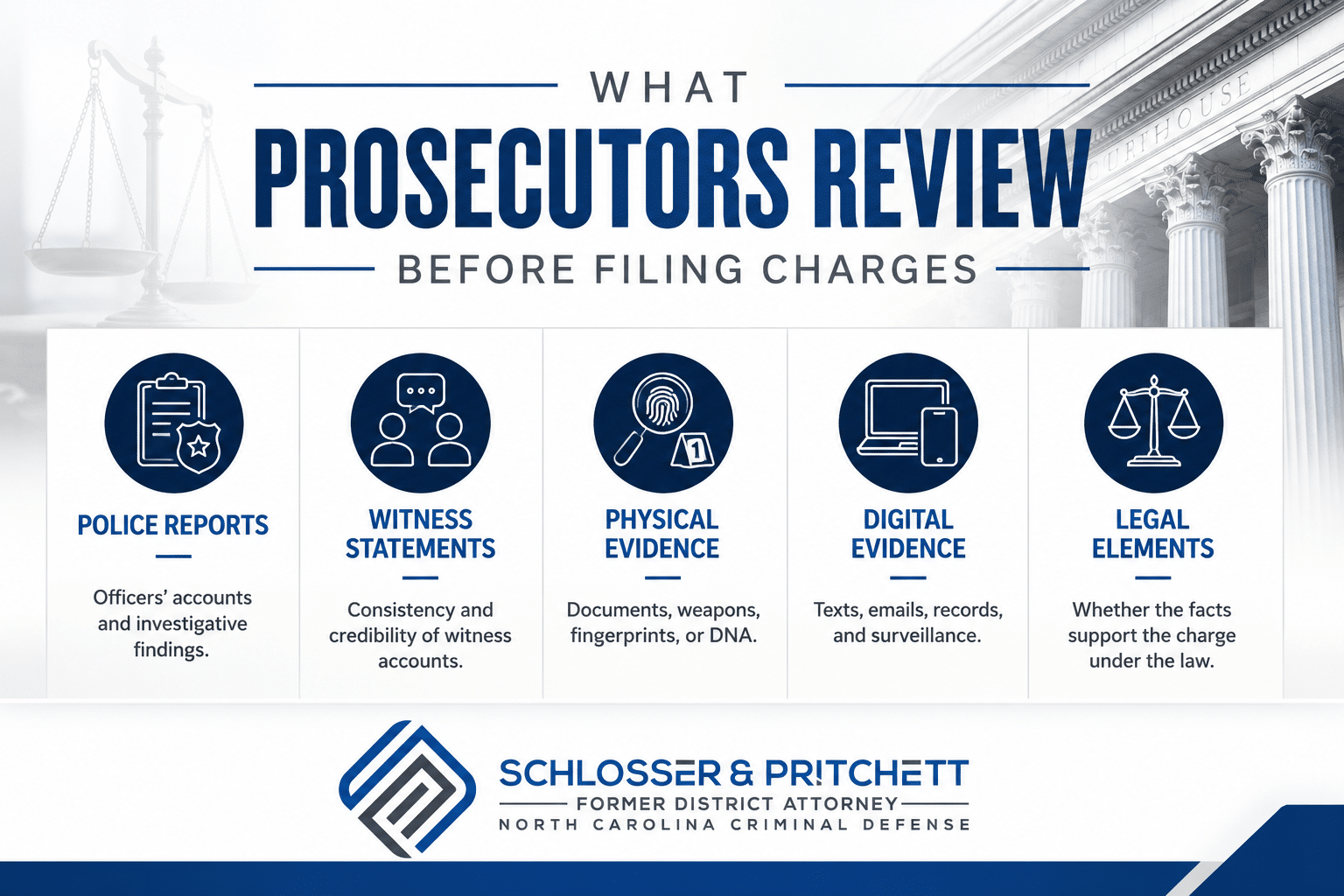
Some of the key factors prosecutors evaluate include:
- Police reports: Officers’ accounts of the incident often provide the initial framework for the case, including witness interviews, observations, and evidence collected during the investigation.
- Witness statements: Prosecutors look at what witnesses say, whether their accounts are consistent, and whether they are likely to be considered credible if the case goes to trial.
- Physical evidence: Items recovered during the investigation, such as deadly weapons, fingerprints, DNA evidence, documents, or other tangible materials, may help support or undermine the allegations.
- Digital evidence: Text messages, emails, social media activity, surveillance footage, phone records, GPS data, and electronic transactions can all become important pieces of the investigation.
- Victim statements: The alleged victim’s account is often a significant part of the review, but prosecutors may compare those statements with other available evidence to assess consistency and reliability.
- Applicable law: Prosecutors must determine whether the available facts satisfy every legal element of the offense under North Carolina law. If the evidence falls short on even one required element, filing or sustaining the charge may become more difficult.
- Credibility and reliability issues: Inconsistencies between witnesses, conflicting accounts, missing evidence, or questions about how evidence was obtained can all affect the strength of the case.
- Potential legal or constitutional issues: Prosecutors may consider whether evidence could be challenged on the grounds of an unlawful search, improper interrogation, or other constitutional concerns.
Instead of viewing each factor in isolation, prosecutors evaluate the evidence as a whole. The issue is not simply whether an allegation has been made, but whether the available facts are strong enough to support criminal charges and withstand scrutiny as the case moves through the legal process.
How Prosecutors Evaluate the Severity of the Alleged Conduct
Even when prosecutors believe there is sufficient evidence to support a charge, they still assess the seriousness of the alleged conduct when deciding how to proceed.
That evaluation can influence the type of charges filed, whether plea negotiations are appropriate, whether the case is treated more aggressively, and how the matter is ultimately presented in court.
Some of the factors that may influence that assessment include:
- Nature of the offense: Prosecutors consider the specific facts surrounding the alleged crime, including whether it involved violence, threats, planning, or a breach of the public trust.
- Harm to victims: Cases involving vulnerable victims or substantial harm may receive closer scrutiny and more aggressive prosecution.
- Prior criminal history: Repeated offenses, similar prior convictions, or a history of failing to comply with court orders may affect how prosecutors approach the matter.
- Aggravating and mitigating circumstances: Aggravating circumstances could include the use of a weapon, multiple victims, or a leadership role in the offense. Mitigating circumstances might include a limited role in the incident, lack of prior criminal history, cooperation with investigators, or other facts that provide additional context.
These considerations do not automatically determine the outcome of a case, but they often influence how prosecutors exercise their discretion and which course they pursue.
A criminal defense lawyer focuses on challenging the sufficiency and reliability of the evidence, identifying legal weaknesses, and presenting context that may weaken the basis for filing or pursuing charges.
Can Prosecutors Decide Not to File Charges After an Arrest?
Yes. In North Carolina, prosecutors may decide not to file or pursue charges after an arrest if the evidence is weak, the legal elements are not supported, witnesses are unreliable, constitutional problems exist, or further prosecution is not appropriate under the circumstances.
This is one reason early legal representation matters. If you know you are under investigation or have already been arrested, the period before charges are finalized can be important.
A defense lawyer may be able to identify problems with the case, preserve helpful evidence, communicate with investigators or prosecutors when appropriate, and help you avoid mistakes that could make the situation worse.
Why Early Defense Strategy Matters in Greensboro Criminal Cases
Criminal cases in Guilford County can move quickly. By the time formal charges are filed, prosecutors may already have reviewed police reports, spoken with law enforcement, assessed witness statements, and formed an initial view of the case.
Early defense strategy can help level the playing field in that process. Your attorney can examine whether the facts actually support the charge, whether evidence was lawfully obtained, whether witnesses are reliable, and whether prosecutors are missing important context.
This is especially important in cases involving felony allegations, assault, domestic violence accusations, drug charges, weapons offenses, theft, DWI-related charges, or other matters where early prosecutorial decisions can affect bond, charging levels, negotiations, and long-term consequences.

Frequently Asked Questions About Prosecutorial Charging Decisions in North Carolina
Can prosecutors drop charges after an arrest in North Carolina?
Yes. Prosecutors may decline, reduce, or dismiss charges after an arrest if the evidence is weak, witnesses are unreliable, legal issues exist, or the facts do not support each required legal element of the offense.
What evidence do prosecutors review before filing criminal charges?
Prosecutors may review police reports, witness statements, victim statements, physical evidence, digital evidence, prior criminal history, and any constitutional issues that could affect whether evidence can be used in court.
Should I contact a lawyer if I am under investigation but have not been charged?
Yes. If you believe you are under investigation in Greensboro, Guilford County, or elsewhere in North Carolina, early legal guidance can help you avoid damaging statements, preserve favorable evidence, and understand how prosecutors may view the case.
Can a defense attorney contact prosecutors before charges are filed?
In some cases, yes. When appropriate, a criminal defense attorney may communicate with prosecutors or investigators, identify weaknesses in the evidence, provide important context, or help address issues before formal charges move forward.
Take the Right Legal Steps Before the Case Moves Forward
If you are under investigation or believe criminal charges may be filed in Greensboro, Guilford County, or the surrounding North Carolina courts, do not wait for prosecutors to decide the direction of your case without legal guidance.
Early involvement of defense counsel may help protect your rights, identify weaknesses in the evidence, and create opportunities to address the situation before it escalates.
If you think charges may be coming, take these steps now:
- Do not speak with investigators without legal advice.
- Save any documents, messages, photos, videos, or witness information that may help your defense.
- Write down what happened while the details are still fresh.
- Contact Schlosser & Pritchett before the case moves further through the system.
Schlosser & Pritchett represents clients facing criminal investigations and charges throughout Greensboro and North Carolina. As former prosecutors, the firm’s attorneys understand how charging decisions are evaluated and how early defense strategy can affect the path forward.
Schlosser & Pritchett represents clients facing criminal investigations and charges in Greensboro, Guilford County, and throughout North Carolina. The firm is located at 426 W Friendly Ave, Greensboro, NC 27401.
Call (336) 292-4076, email jpritchettlaw@gmail.com, or contact Schlosser & Pritchett online to speak with a Greensboro criminal defense attorney before the case moves further through the system.