





A second, third, or later DWI charge in North Carolina carries much more risk than a first impaired driving arrest. Repeat DWI allegations can increase sentencing exposure, trigger longer license consequences, and, in some cases, turn the case into a felony habitual impaired driving charge.
For drivers in Charlotte, Mecklenburg County, Greensboro, or anywhere in North Carolina, the difference between a misdemeanor DWI sentence and a felony record often depends on the number of prior convictions, when those convictions occurred, and whether prosecutors can legally count them. A North Carolina DWI lawyer can review those prior convictions before they decide the outcome of the case.
At Schlosser & Pritchett, our attorneys represent clients facing DWI, repeat DWI, habitual impaired driving, and related criminal traffic charges in North Carolina. Because repeat impaired driving cases can affect both the criminal case and a person’s ability to drive, early review of the arrest, record, and license consequences is critical.
How North Carolina DWI Sentencing Levels Work
Most impaired driving convictions in North Carolina are sentenced under the state’s impaired driving sentencing law. North Carolina uses sentencing levels that range from lower-level punishments to more serious penalties when aggravating circumstances are present.
After a DWI conviction, the judge considers grossly aggravating factors, aggravating factors, and mitigating factors. Those factors help determine the sentencing level and the punishment that may follow.
Some of the most serious grossly aggravating factors include:
- A prior impaired driving conviction within seven years of the current offense
- Driving while the person’s license was already revoked for an impaired driving revocation
- Causing serious injury during the current offense
- Having a child under 18 or another protected passenger in the vehicle
When multiple grossly aggravating factors apply, the sentencing exposure can increase quickly. A repeat DWI can move a case into a much more serious sentencing category, even before the case reaches the felony habitual impaired driving threshold.
That is why repeat DWI defense starts with careful review. The defense needs to examine whether the prior convictions were properly counted, whether the current arrest was lawful, and whether the evidence actually supports the level of prosecution the prosecutors are pursuing.
What Is Habitual Impaired Driving in North Carolina?
Habitual impaired driving is not simply a harsh misdemeanor sentence. It is a separate felony offense under North Carolina law.
Under North Carolina’s habitual impaired driving law, a person can be charged with habitual impaired driving if they drive while impaired and have three or more prior impaired driving convictions within 10 years of the current offense.
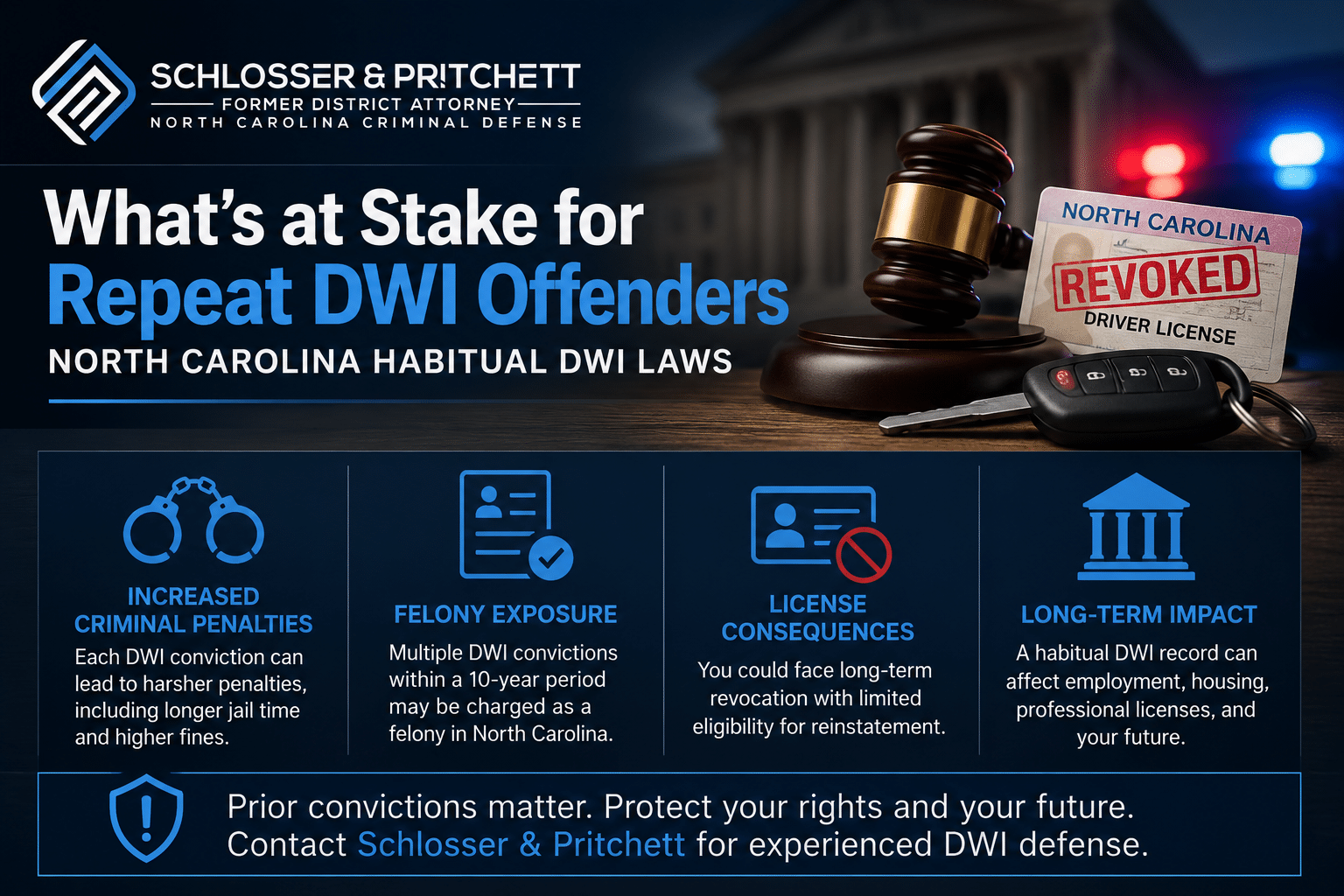
A habitual impaired driving conviction is a Class F felony. The law requires a minimum active term of 12 months that cannot be suspended, and that sentence must run consecutively to any other sentence. A conviction also results in permanent license revocation, and the vehicle driven during the offense may be subject to forfeiture.
Because the 10-year window and the number of prior convictions matter so much, the details of the record are important. The date of each prior offense, the date of conviction, and whether an out-of-state conviction is substantially similar to a North Carolina impaired driving offense may all affect whether the felony charge can stand.
A defense attorney should review each prior conviction before accepting the state’s version of the record.
License Revocation and Ignition Interlock After a Repeat DWI
Repeat DWI cases can create serious license consequences separate from the criminal sentence. A person may face license revocation through the North Carolina Division of Motor Vehicles even when the court case is still being resolved.
For repeat offenders, license consequences may include:
- Longer license revocation periods
- Difficulty obtaining limited driving privileges
- Ignition interlock requirements
- Permanent revocation after habitual impaired driving
- Additional charges if the person drives while revoked
An ignition interlock device is a breath-testing unit connected to the vehicle’s ignition. Depending on the case, a driver may be required to use an interlock device before regaining driving privileges or as part of a restricted driving arrangement.
Driving while your license is revoked can make matters worse. In some DWI cases, driving on a license already revoked for impaired driving can become a grossly aggravating factor, which may increase the sentencing level if there is a conviction.
That feedback loop is one reason repeat DWI cases can escalate quickly. A license issue can turn into a new criminal charge, and that new charge can then affect future DWI sentencing.
How a Repeat DWI Charge Can Be Challenged
A repeat DWI charge is not a conviction. Even when someone has prior impaired driving convictions, the state still has to prove the current case and properly establish the prior record it wants to use.
A North Carolina DWI defense lawyer may examine:
- Whether the traffic stop was lawful
- Whether officers had reasonable suspicion or probable cause
- Whether field sobriety tests were properly administered
- Whether breath or blood testing procedures were followed
- Whether testing equipment was maintained and used correctly
- Whether the prior convictions legally count
- Whether out-of-state convictions are substantially similar
- Whether the state can prove every element of habitual impaired driving
In some cases, a defense challenge may focus on the current arrest. In others, the key issue may be the record of prior convictions. A prior conviction that is too old, improperly counted, or not legally comparable may affect whether the state can pursue a felony habitual impaired driving charge.
Schlosser & Pritchett also handles related criminal traffic charges, including driving while license revoked, traffic offenses, and other charges that may overlap with a DWI case.
Why Early Defense Review Matters in Habitual DWI Cases
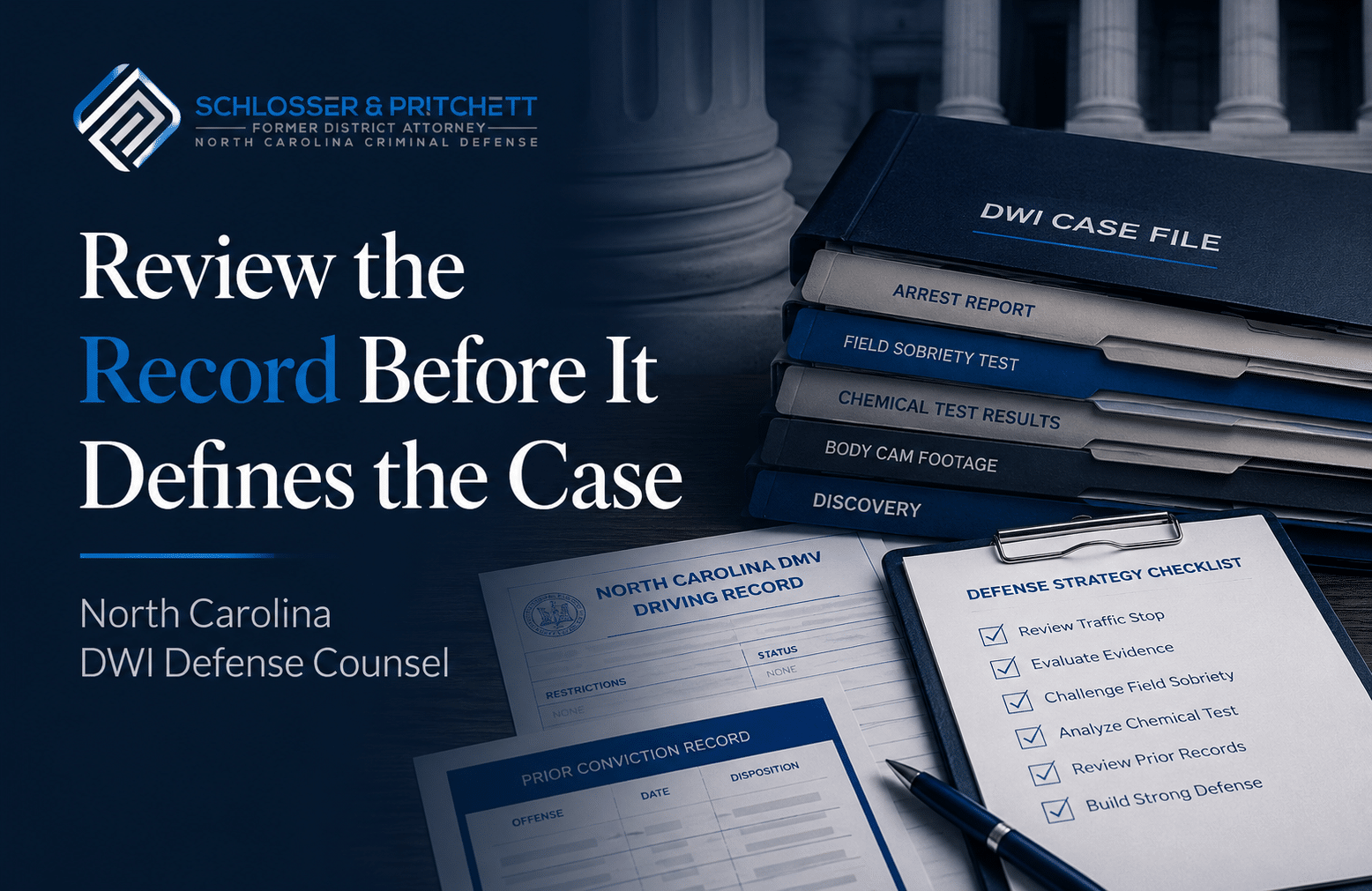
Habitual impaired driving cases require fast and careful review. By the time a person appears in court, prosecutors may already be relying on prior convictions, DMV records, chemical test results, officer reports, and charging decisions that shape the entire case.
Early defense involvement can help identify whether the prior convictions are accurate, whether the current stop and arrest can be challenged, and whether the felony threshold is actually supported by the record.
That review may also help with practical issues, such as license consequences, interlock requirements, work-related driving concerns, and whether the client may be facing additional criminal traffic allegations.
Frequently Asked Questions About Habitual DWI in North Carolina
How many DWI convictions make a person a habitual impaired driver in North Carolina?
A person may be charged with habitual impaired driving in North Carolina if they drive while impaired and have three or more prior impaired driving convictions within 10 years of the current offense.
Is habitual impaired driving a felony in North Carolina?
Yes. Habitual impaired driving is a Class F felony in North Carolina. A conviction carries serious criminal penalties, including a required active sentence, permanent license revocation, and possible vehicle forfeiture.
Can old DWI convictions count toward habitual impaired driving?
Only qualifying prior impaired driving convictions within the required 10-year window may count toward habitual impaired driving. The dates and legal basis for each prior conviction should be reviewed carefully.
Can a habitual DWI charge be challenged?
Yes. A defense attorney may challenge the traffic stop, arrest, testing procedures, officer conduct, chemical test evidence, and whether the prior convictions actually qualify toward the habitual impaired driving charge.
Talk to a North Carolina DWI Lawyer About a Repeat DWI Charge
If you are facing a repeat DWI or habitual impaired driving charge in Charlotte, Mecklenburg County, Greensboro, or elsewhere in North Carolina, do not wait to find out how prosecutors will count your prior record. A repeat DWI case can affect your freedom, your license, your vehicle, and your long-term criminal record.
Before entering a plea or making decisions about your case, take these steps:
- Do not assume every prior conviction legally counts.
- Save any paperwork from prior DWI cases, DMV notices, and court documents.
- Do not drive if your license is revoked or restricted.
- Speak with a North Carolina DWI defense lawyer as soon as possible.
Schlosser & Pritchett represents clients facing DWI, repeat DWI, habitual impaired driving, and related criminal traffic charges in North Carolina. The firm is located at 426 W Friendly Ave, Greensboro, NC 27401.
Call (336) 292-4076, email jpritchettlaw@gmail.com, or contact Schlosser & Pritchett online to discuss your case with a North Carolina DWI defense lawyer.