




Being required to register as a sex offender in North Carolina creates an ongoing set of deadlines and reporting duties that can continue for decades. Depending on the type of registration, a person may have to register with the county sheriff, verify information on a recurring schedule, report address and name changes, disclose certain school or employment changes, and update online identifiers.
Many of these duties have short deadlines, and a willful failure to comply can lead to a new felony charge. For someone living, working, or attending school in Greensboro or Guilford County, understanding the registration calendar is essential.
A Greensboro criminal defense lawyer can review which requirements apply, when reports are due, and whether a registration or compliance issue could expose someone to additional criminal charges.
Where Do You Register as a Sex Offender in North Carolina?
North Carolina generally requires a person with a reportable conviction to register with the sheriff of the county where they reside.
For someone moving into North Carolina from another state, registration generally must occur within three business days after establishing residence in North Carolina or when the person has been present in the state for 15 days, whichever occurs first.
For current North Carolina residents, timing depends on the circumstances. A person released from a penal institution generally must register within three business days of release or arrival in the county where the person will live outside the institution. If no active prison sentence is imposed for the reportable conviction, registration may be required immediately upon conviction.
North Carolina’s registration laws can also apply to certain nonresident students and nonresident workers.
This is especially important for someone who lives outside North Carolina but works or attends school in Greensboro. An out-of-state conviction does not necessarily mean you can ignore North Carolina’s registration requirements.
For more information about those situations, see our article on North Carolina sex offender registration for out-of-state offenders.
How Long Does Sex Offender Registration Last in North Carolina?
For many people subject to North Carolina’s standard registration program, registration must be maintained for at least 30 years from the date of initial county registration unless the person later qualifies for and successfully obtains court-ordered termination of the requirement.
North Carolina also imposes lifetime registration on certain categories of registrants, including people classified as:
- Recidivists
- People convicted of an aggravated offense as defined by North Carolina law
- Sexually violent predators
For those categories, the registration requirement generally continues for life.
The distinction between 30-year registration and lifetime registration can therefore be one of the most important consequences of the underlying conviction.
How Often Must a North Carolina Registrant Verify an Address?
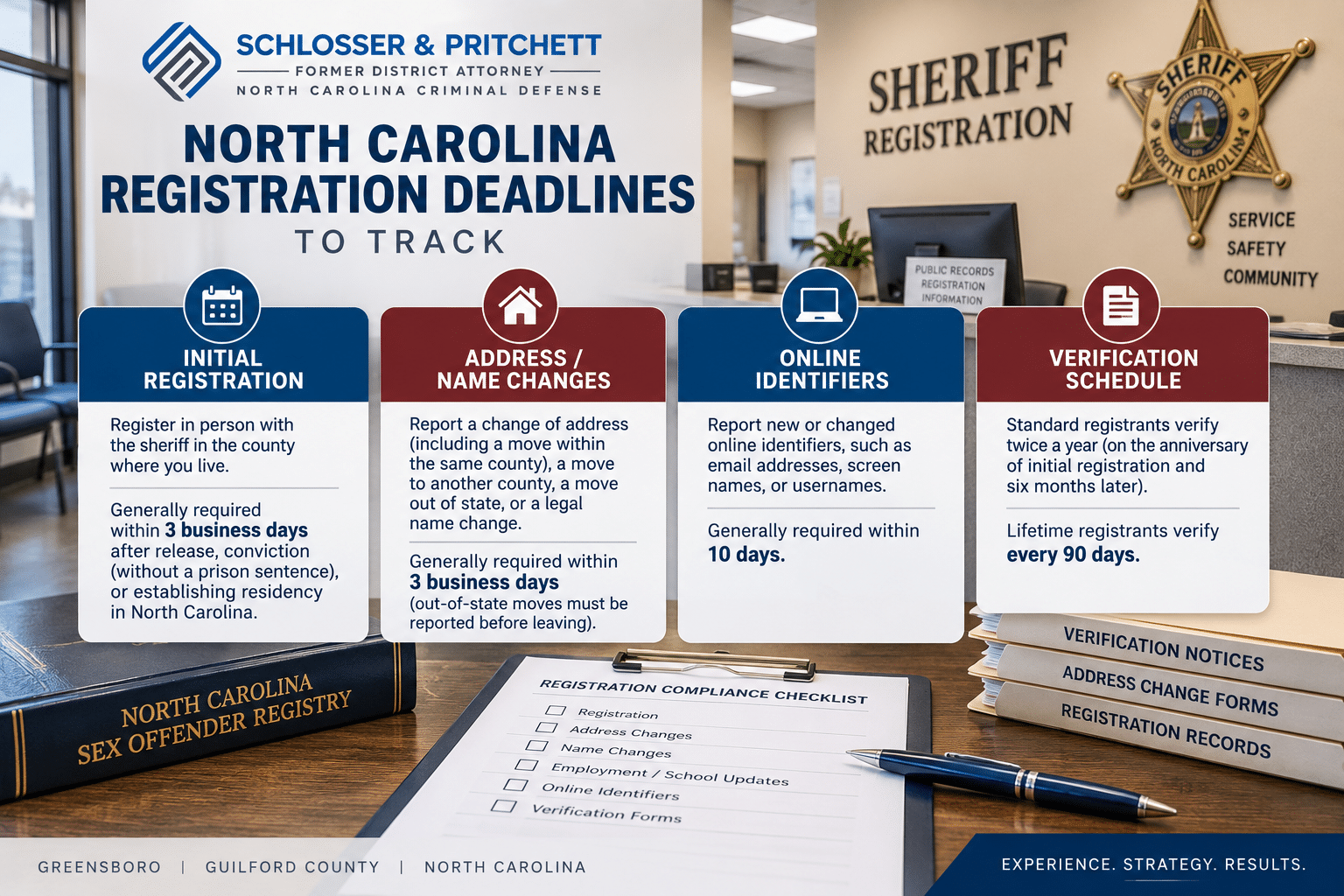
For a person in the standard registration program, North Carolina generally requires registration information to be verified twice each year.
The verification schedule is tied to:
- The anniversary of the person’s initial registration date; and
- Six months after that anniversary date.
The Sheriff mails a nonforwardable verification form to the last reported address. The registrant generally must return the form in person to the sheriff within three business days after receiving it.
That is why keeping an address current is so important. A verification form sent to an old address can create problems beyond a missed piece of mail.
How Often Do Lifetime Registrants Have to Verify Their Information?
People who are required to register for life because they are recidivists, were convicted of an aggravated offense, or were classified as sexually violent predators are subject to a more frequent verification schedule.
Their registration information is generally verified every 90 days after the initial registration date.
That difference can substantially increase the number of compliance dates a lifetime registrant must track each year.
What Changes Must Be Reported to the Sheriff?
Registration does not end after the initial trip to the sheriff’s office. You must report certain changes while the registration requirement remains in effect.
Depending on the situation, reportable changes can include:
- A change of address
- A move to another North Carolina county
- A move out of North Carolina
- A legal name change
- Certain changes involving enrollment or employment at an institution of higher education
- New or changed online identifiers
Each type of change has its own statutory requirements, and the timing differs by category.
How Quickly Must an Address Change Be Reported?
A registrant who changes address must comply with North Carolina’s address-reporting requirements within the time required by statute.
A move within North Carolina can require in-person reporting to the appropriate sheriff, including additional steps when the person moves from one county to another.
A person planning to move out of North Carolina must pay close attention to timing because the statute requires advance reporting before departure.
That makes an out-of-state move different from many other registration changes: waiting until after arriving in the new state may already create a compliance problem in North Carolina.
Do Changes to Online Accounts Have to Be Reported?
Yes. North Carolina requires registrants to provide certain online-identifier information.
If a person changes an online identifier or obtains a new one, the law generally requires reporting that information in person to the registering sheriff within the statutory deadline.
Online identifiers can include certain email addresses, screen names, usernames, or other identifiers covered by the registration statute.
This reporting duty is separate from older North Carolina restrictions involving access to social-networking websites, some of which were the subject of constitutional litigation. For current compliance, registration laws can still require disclosure of qualifying online identifiers.
What Happens If You Fail to Comply With North Carolina Sex Offender Registration?
Willfully failing to comply with certain registration requirements can lead to a new criminal charge.
Under North Carolina law, a person required to register may be guilty of a Class F felony for willfully engaging in conduct such as:
- Failing to register as required
- Failing to report a required change of address
- Failing to return a required verification notice
- Submitting false registration or verification information
- Failing to report certain school enrollment changes
- Failing to report certain employment changes involving an institution of higher education
The word willfully matters.
A missed deadline, a dispute about notice, a misunderstanding about residence, and an intentional refusal to comply are not necessarily identical factual situations. In a failure-to-register prosecution, the circumstances surrounding what happened and what the State can prove may become important defense issues.
Can a Failure-to-Register Charge Be Separate From the Original Sex Offense?
Yes.
A failure-to-register prosecution is a new criminal matter arising from alleged noncompliance with the registration laws. It is not simply an extension of the original conviction.
That means someone who completed a sentence for the underlying offense may still face a new felony prosecution years later if the State alleges a willful violation of a registration requirement.
This is one reason seemingly administrative requirements such as reporting an address change or returning a verification form should not be treated casually.
Do Registered Sex Offenders Face Residency or Premises Restrictions?
North Carolina law also contains restrictions that can affect where certain registrants may live or be present.
These laws are separate from the registration deadlines discussed above and can depend on the person’s conviction, the location involved, and other statutory requirements.
Because North Carolina’s residency and premises restrictions have also been affected by litigation and statutory changes, someone deciding where to live, work, visit, or attend an event should rely on current legal guidance rather than an old article, notice, or informal explanation.
For additional background, see our discussion of North Carolina restrictions involving certain locations where minors are present.
Can You Petition to Get Off the North Carolina Sex Offender Registry?
Some people subject to the standard 30-year registration requirement may be able to petition the superior court to terminate registration 10 years after the initial county registration date.
This is not automatic removal.
Eligibility and the proper place to file depend in part on where the underlying reportable conviction occurred.
For a North Carolina conviction, you generally file the petition in the district where the person was convicted. Different filing provisions apply to qualifying out-of-state and federal convictions.
What Must the Court Find Before Ending Registration?
North Carolina law requires the court to consider several statutory conditions before granting a petition to terminate the 30-year registration requirement.
Among other things, the petitioner must demonstrate that:
- The person has not been arrested for a crime that would require registration under the Article since completing the sentence;
- The requested relief complies with applicable federal standards; and
- The court is satisfied that the person is not a current or potential threat to public safety.
The district attorney must receive notice before the hearing and may present evidence or arguments opposing the request.
If a petition is denied, North Carolina law generally permits another petition after one year.
For a more detailed discussion of this process, see Can I Be Removed from the North Carolina Sex Offender Registry?
Can a Lifetime Registrant Petition for Early Termination?
The petition process for shortening the standard 30-year registration requirement does not generally provide the same path for people required to register for life as recidivists, people convicted of aggravated offenses, or people classified as sexually violent predators.
North Carolina law states that these categories maintain registration for life, subject to limited circumstances such as the underlying conviction being reversed, vacated, or set aside, or an unconditional pardon of innocence.
That makes correct classification at the time of the original case especially important.
Why Keeping a Registration Calendar Matters
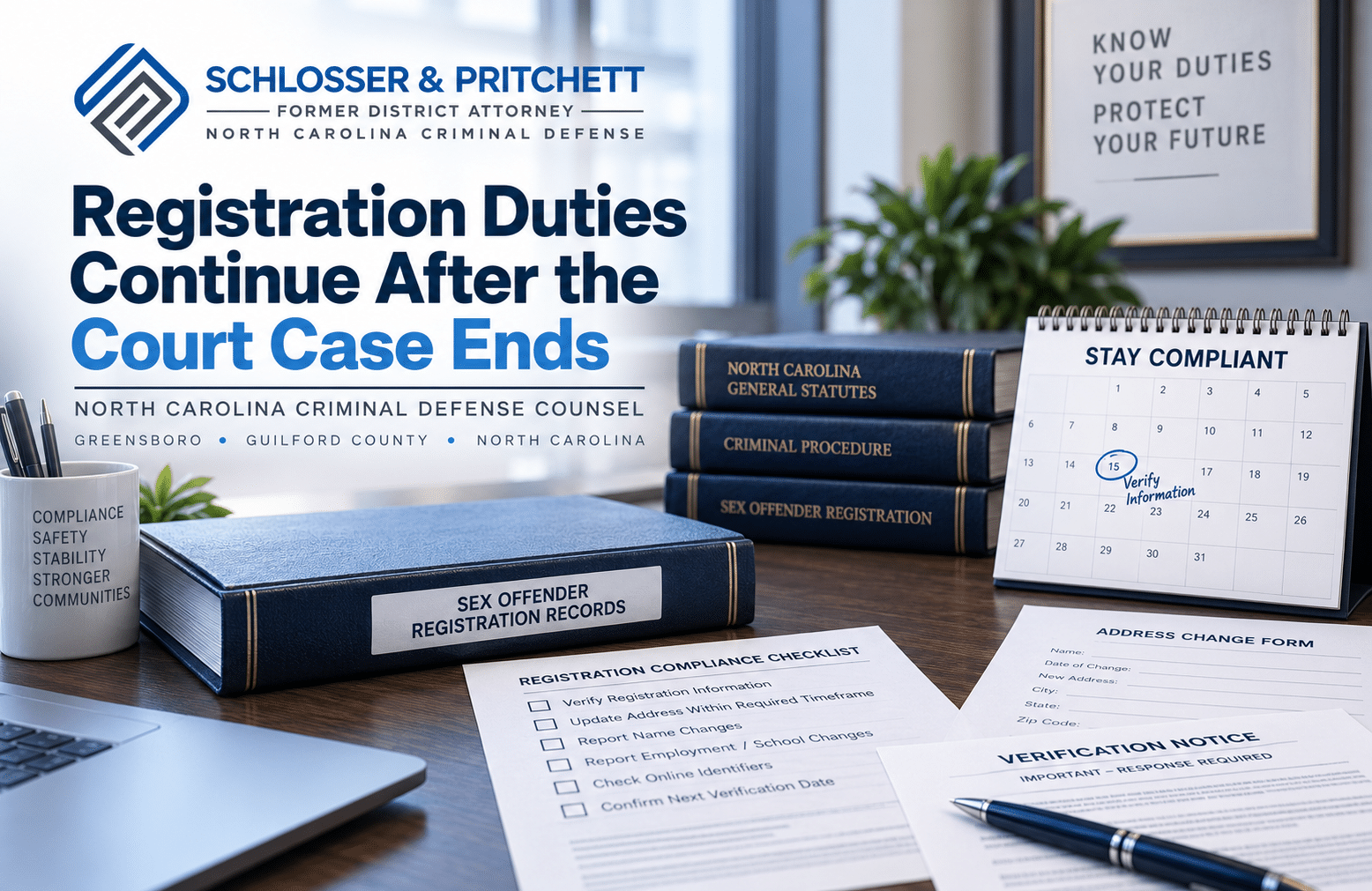
North Carolina sex offender registration is not a single deadline. It is an ongoing series of obligations that can include:
- Initial registration
- Semiannual or 90-day verification
- Address-change reporting
- Advance notice before certain out-of-state moves
- Name-change reporting
- School and employment updates
- Online-identifier updates
Someone subject to registration should know which requirements apply to their classification and should not assume the sheriff will remind them before every reporting deadline.
Keeping copies of forms, notices, confirmation of in-person reporting, and other registration records can also be important if a later dispute arises about whether a requirement was satisfied.
Frequently Asked Questions About North Carolina Sex Offender Registration
How long do you have to register after moving to North Carolina?
A person moving into North Carolina with a reportable conviction generally must register within three business days after establishing residence in the state or when the person has been present in North Carolina for 15 days, whichever occurs first.
How often must a registered sex offender verify an address in North Carolina?
Standard registrants generally verify their information twice each year. Registrants who are subject to lifetime registration as recidivists, people convicted of aggravated offenses, or sexually violent predators generally verify every 90 days.
What happens if you miss a sex offender registration deadline?
A willful failure to comply with certain registration requirements can result in a Class F felony charge. The exact facts matter, including which requirement was allegedly missed and whether the State can prove the violation was willful.
Can you get off the North Carolina sex offender registry after 10 years?
Some people subject to the standard 30-year registration requirement may petition the superior court after 10 years from initial county registration, but removal is not automatic. The court must make the findings required by North Carolina law.
Do you have to report a new email address or username?
North Carolina requires registrants to report qualifying new or changed online identifiers within the applicable statutory deadline.
Talk to a Greensboro Criminal Defense Lawyer About Registration Compliance
A sex offender registration requirement can create years of recurring deadlines, and a missed reporting obligation can lead to a separate felony prosecution.
Jan Pritchett is a Board Certified Specialist in State and Federal Criminal Law and previously served as a Guilford County Assistant District Attorney. Schlosser & Pritchett represents clients facing registration-compliance allegations, felony charges, probation matters, and other criminal cases in Greensboro and throughout the Piedmont Triad.
If you are unsure about an upcoming deadline, an address change, a verification notice, a failure-to-register allegation, or eligibility to petition for termination, it is better to review the issue before another deadline passes.
Schlosser & Pritchett
426 W Friendly Ave
Greensboro, NC 27401
Phone: (336) 292-4076
Contact Schlosser & Pritchett online